Digital Signage for Hotels: The 2026 Owner's Guide
April 24, 20269 min readScreenivo Team
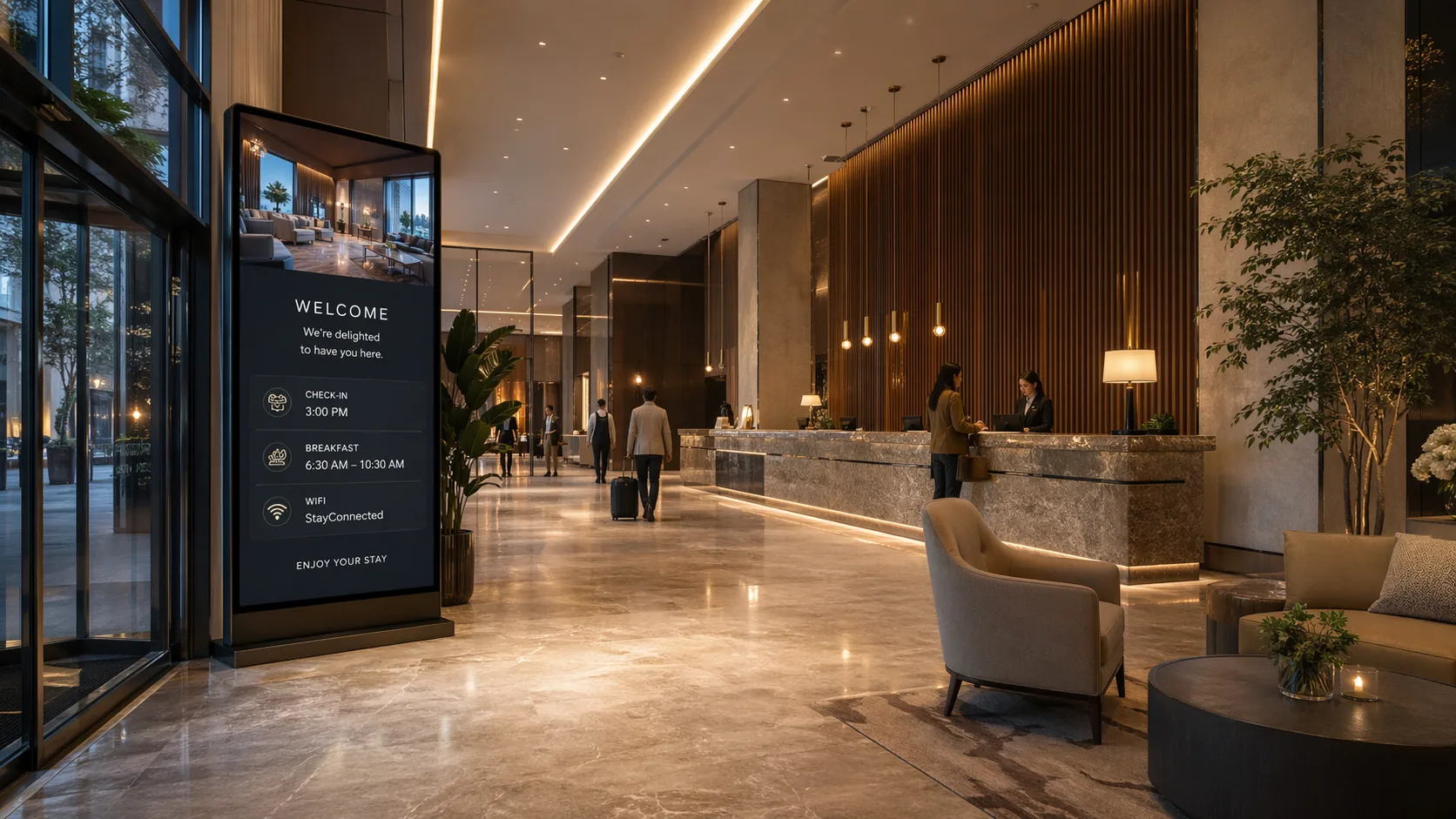
Your lobby already tells guests what kind of stay they are about to have. The lighting. The scent. The pace at the desk. And, too often, the screen on the wall showing a random TV channel that has nothing to do with your property.
That is wasted attention.
Digital signage for hotels fixes that gap. Instead of passive screens, you get a live communication layer across the lobby, elevators, breakfast area, event floors, and other guest touchpoints. Done well, hotel digital signage makes the property feel calmer, clearer, and more current for guests, while quietly taking repetitive work off your team.
1. Why Most Hotel Screens Are Wasted Guest Attention
Many hotels already have screens. They are just not doing much.
A lobby TV tuned to cable news does not help a guest find the spa. A printed easel sign does not update when a conference room changes. A paper breakfast notice taped near the elevator does not exactly say "modern hospitality."
That mismatch matters because guests are increasingly comfortable with digital self-service in hotels. In a 2024 Mews survey of 1,000 American travelers and 1,000 American hotel workers, nearly 80% of travelers said they would stay at a hotel with a fully automated front desk or self-service kiosk, and more than 40% said they prefer to check in through a website, app, or digital kiosk (source).
You do not need to automate the whole arrival experience to benefit from that shift. You just need your on-property communication to feel as current as your guests expect:
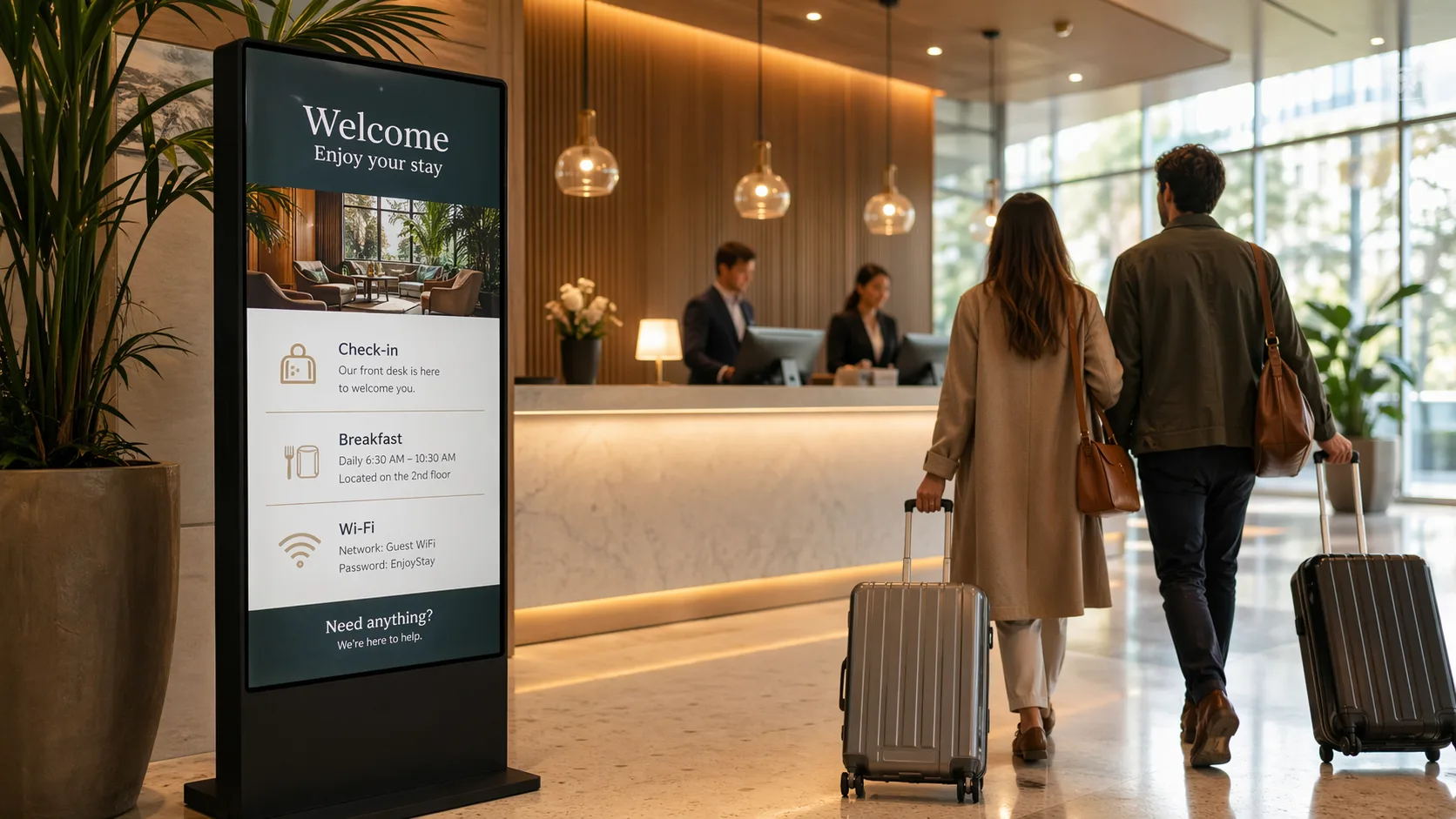
- Welcome guests clearly. Show the property name, check-in guidance, breakfast hours, Wi-Fi info, or event details instead of whatever happened to be on TV.
- Reduce uncertainty fast. A clear digital screen answers "where do I go?" before the guest needs to ask.
- Make the hotel feel intentional. Managed screens look like part of the experience. Random TVs look forgotten.
2. Lobby Screens Set the Tone Before Staff Even Speak
The lobby is not just a waiting space. It is the handoff between booking and stay.
When guests walk in, they are looking for cues. Where is reception? Is breakfast included? What time does the bar open? Is the rooftop closed for a private event tonight? The faster your property answers those questions, the more polished the arrival feels.
This is also where personalization starts to matter. Medallia reported in 2024 that 61% of consumers are willing to spend more for personalized experiences, yet only 23% of respondents said they experienced high levels of personalization after recent hotel stays (source).
A lobby screen will not solve personalization on its own, but it gives you a practical place to act on it:
- Daypart the message. Breakfast info in the morning. Happy hour at 4 PM. Late checkout and transport reminders the next day.
- Match the stay type. A city hotel can push local recommendations. A resort can highlight poolside service, spa slots, and evening events.
- Welcome groups gracefully. Conference attendees, wedding guests, and tour groups feel expected when their information is already on screen.
- Keep the front desk human. Staff spend less time repeating basics and more time helping guests with real requests.
3. Wayfinding and Event Signage Reduce Front-Desk Repetition
Hotels get complicated fast. Elevators split floors. Ballrooms change names. Wedding guests and conference attendees arrive at the same time. The gym is on one level, the spa on another, and breakfast somewhere else entirely.
When the signage is static, outdated, or hard to spot, your staff become the backup navigation system.
That is why digital wayfinding matters so much in hospitality. As Noventri puts it, poor signage leaves guests feeling lost, burdens front-desk and event staff with constant questions, and makes the venue feel disorganized (source).
Use hotel wayfinding digital signage where confusion usually starts:
- Entrance and lobby directories. Show room blocks, restaurant hours, check-in flow, and the fastest route to major amenities.
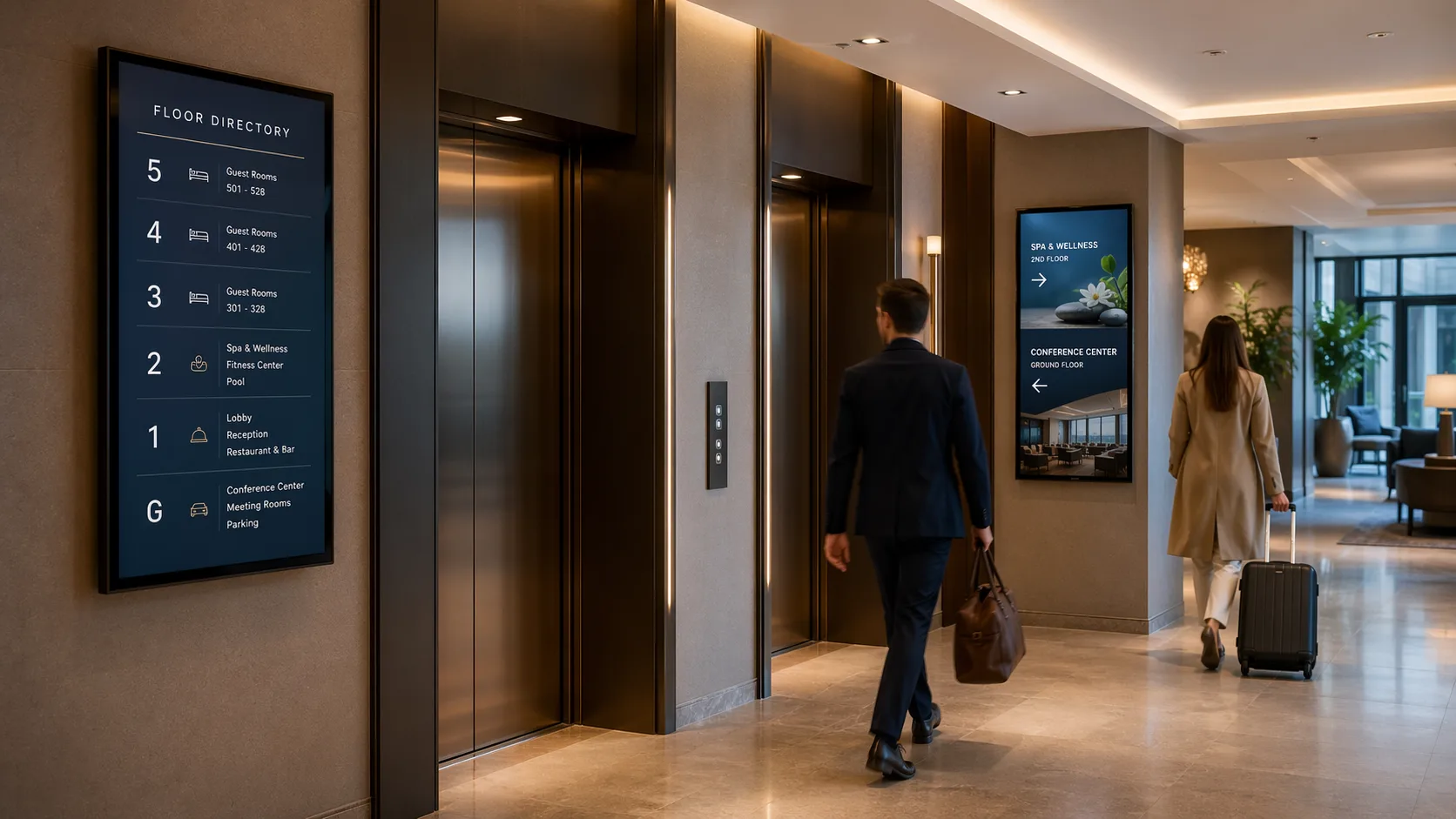
- Elevator landings. Display floor-by-floor directions, event names, and schedule changes without printing fresh boards.
- Conference and wedding areas. Swap room assignments in minutes when a meeting runs late or a ballroom changes over.
- Multi-building properties. Guide guests between reception, rooms, spa, parking, and leisure facilities without sending them back to the desk.
Clear wayfinding does two things at once. Guests feel more taken care of, and your team gets fewer avoidable interruptions.
4. Real-Time Updates Beat Printed Signs Every Time
Hotel operations change all day.
Breakfast ends. A shuttle runs late. The rooftop is reserved for a private event. A meeting room changes. A spa slot opens up. The pool closes for maintenance. None of that fits well on paper.
Printed signs create friction because they are always one step behind reality. Somebody has to make them, print them, place them, notice when they are wrong, and replace them again.
Digital signage compresses that whole loop into one update.
- Operational notices stay accurate. Push a pool closure, maintenance notice, or event-room update to every relevant screen at once.
- Brand standards stay cleaner. No more taped A4 sheets on a nice wall because something changed 20 minutes ago.
- Temporary messaging becomes easy. Airport shuttle times, weather alerts, local traffic disruptions, breakfast overflow seating, all of it can appear only when needed.
- Multi-property consistency improves. Chain operators can roll out the same campaign or service message across every location, then localize only the parts that need local detail.
This is one of the clearest ownership wins in digital signage for hospitality. Guests see a smoother property. Operators get faster control.
5. Digital Signage Helps Sell More Amenities Without Feeling Pushy
The best hotel upsells do not feel like upsells. They feel useful.
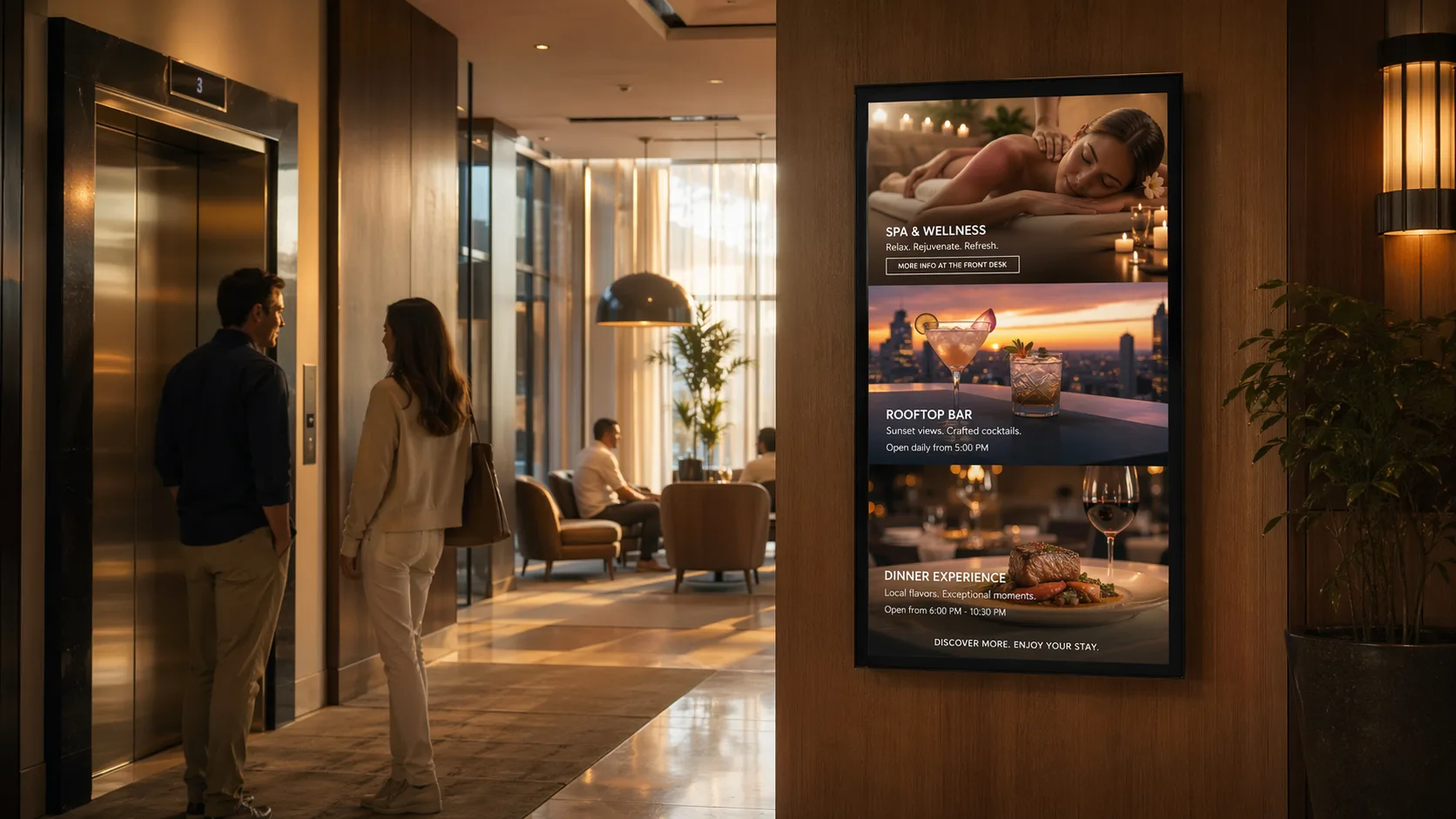
A guest waiting for the elevator is already in a decision moment. Dinner on property or somewhere else? Spa today or maybe tomorrow? Stay in the room tonight or go up to the rooftop bar? A good screen can answer those questions with timing, visuals, and zero pressure.
This is not just a branding play. Samsung Business Insights cites research showing that adding one on-premise sign can produce an average 4.75% increase in annual sales for businesses, and that 63% of people say digital signage catches their attention (source).
For hotels, that can translate into better visibility for the things you already sell. The same timing logic helps restaurants promote specials and retail stores highlight impulse purchases when customers are already deciding.
- Spa and wellness. Promote same-day openings, couples packages, or rainy-day offers.
- Food and beverage. Push breakfast reminders in the morning, bar specials in the afternoon, and dinner offers near elevators in the evening.
- Experiences and upgrades. Late checkout, local tours, private transfers, or premium room add-ons work better when the offer appears in the right place.
- Events and partnerships. Highlight live music, brunch, seasonal packages, or local partner offers without redesigning print every week.
The key is restraint. Useful, timely offers feel like service. Constant screen spam feels cheap.
6. Multi-Property Operators Get One Standard, Not 12 Different Sign Systems
The bigger the portfolio, the messier signage becomes.
One property uses printed boards. Another uses a USB stick. A third has smart TVs nobody wants to touch because only one person remembers how they work. The result is the same everywhere: inconsistent brand presentation and slow updates.
Cloud-based hotel digital signage gives operators one dashboard for all of it:
- Shared templates. Keep brand type, colors, and layout consistent across every property.
- Local control where needed. Let each site change breakfast hours, event schedules, or local offers without breaking the system.
- Fast rollout. Launch a seasonal promotion or loyalty campaign everywhere at once.
- Less operational weirdness. No more emailing static JPEGs around and hoping each property displays them correctly.
This matters even for independent hotels with growth plans. The earlier your screen workflow is centralized, the easier it is to scale without inventing a new signage process at every site.
7. Replacing Printed Signs Cuts Clutter and Speeds Up Operations
Hotels rarely have a signage problem in one place. They have it everywhere in small doses.
A breakfast sign near reception. A meeting room board outside the ballroom. A spa promo at the lift. A temporary notice by the side entrance. A shuttle update by the concierge. One by one, they seem harmless. Together, they create visual noise and operational drag.
Digital signage helps because it reduces both:
- Less physical clutter. Fewer foam boards, easels, taped notices, and last-minute paper inserts around the property.
- Fewer manual updates. Teams stop spending time on low-value print tasks every time information changes.
- Cleaner premium feel. Luxury and boutique properties especially benefit when service information looks designed, not improvised.
- Faster reaction time. Urgent operational changes can go live in minutes, not after someone finds the printer.
This is where guest experience and smoother operations finally meet. Guests see a better-organized hotel. Staff feel less friction behind the scenes.
8. What Hotel Owners Should Look For in Digital Signage Software
Not every signage platform is built for hospitality. Some are too clunky. Some assume a retail layout. Some make simple updates feel like a design project.
For hotels, the essentials are straightforward:
- Simple pairing. Plug in a device, enter a code, and get the screen online fast.
- Playlist and scheduling controls. You need content to change by time of day, day of week, and location.
- Remote management. Owners and operators should not have to be on-site to update a breakfast screen or conference board.
- Multi-screen organization. Lobby, elevators, breakfast area, conference floor, spa, bar, each screen should have a clear job.
- Affordable hardware. You should be able to use common displays and low-cost media players, not proprietary hardware.
- Reliable uptime. A black screen in a hotel lobby is worse than no screen at all.
Platforms like Screenivo are built around exactly that model: pair a screen once, manage it from anywhere, and keep every property communication point current without turning it into an IT project.
The Bottom Line
Digital signage for hotels is not about adding more screens. It is about making the screens you already have finally useful.
For guests, that means clearer arrival, easier navigation, better information, and a property that feels current instead of patched together. For owners and operators, it means fewer repetitive questions, faster updates, better amenity promotion, and a cleaner operating rhythm across one hotel or many.
If you want to see what modern hotel signage looks like without the usual hardware headache, get in touch with Screenivo. You can have your first screen paired and live in minutes.
Want more examples by industry? Explore our full library of digital signage guides.
Ready to make your hotel screens actually useful? Try Screenivo free and turn your lobby, event, and amenity screens into a managed guest experience system.
Sources
- Mews / Hospitality Net — Mews Survey Reveals 80% of Travelers Prefer Hotels with a Completely Automated Front Desk or Self-Service Technology (80% willingness to stay at a hotel with a fully automated front desk or self-service kiosk; 40%+ prefer website, app, or kiosk check-in): hospitalitynet.org
- Medallia — Medallia Research Finds 61% of Consumers Are Willing to Spend More for Personalized Experiences (61% willing to spend more for personalized experiences; 23% reported high personalization after recent hotel stays): medallia.com
- Noventri — Digital Wayfinding Signage (poor signage burdens front-desk and event staff with constant questions): noventri.com
- Samsung Business Insights — How outdoor LED hotel signage drives revenue (one on-premise sign can produce an average 4.75% annual sales increase; 63% of people say digital signage catches their attention): insights.samsung.com