Digital Signage for Retail Stores: 2026 Small Shop Guide
April 23, 20268 min readScreenivo Team
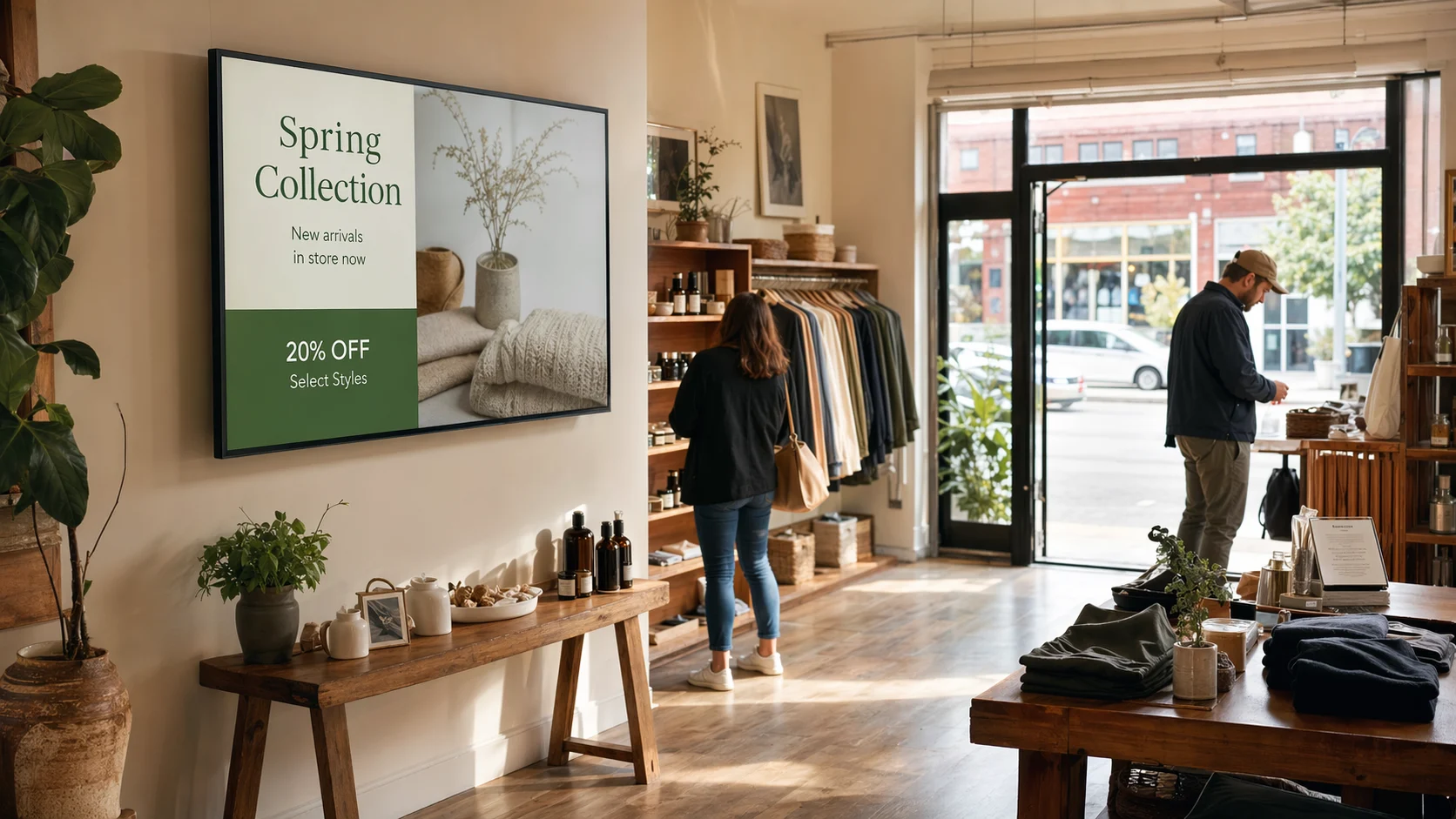
A sale poster taped to the window starts strong. Then the corners curl. The date passes. The product sells out. A week later, the same faded sign is still there, quietly telling people your shop is a little behind.
Small retail does not have much room for wasted attention. Every passerby, every customer waiting at checkout, every person browsing near the new arrivals table is a moment you can either use or lose.
Digital signage for retail stores fixes the lag. One screen in the window, one at checkout, or one near your best products can turn static space into a live selling channel. Not a huge retail media network. Not a six-month IT project. Just clear, current messages where shoppers already look.
1. Why Static Posters Stop Working in Modern Retail
Printed posters are easy to make, but they are hard to keep honest. They stay up after the promotion ends. They advertise stock you no longer have. They force your team to choose between serving customers and walking around with a tape dispenser.
Retail digital signage gives you the same physical presence as a poster, but with a useful difference: you can change it.
- No stale promotions. End a sale at 6 PM and the screen changes at 6 PM. No awkward "sorry, that offer ended yesterday" conversations.
- No reprint cycle. Price changed? Weather shifted? Supplier delayed a colorway? Update the screen instead of paying for another batch of signs.
- No single-message limit. A printed poster says one thing all week. A screen can rotate new arrivals, bundles, loyalty offers, and store hours in the same spot.
That matters because shoppers are already moving through a digital world before they walk in. Your physical store has to feel just as responsive.
2. Digital Window Displays Pull People In From the Street
Your window is not decoration. It is your first sales pitch.
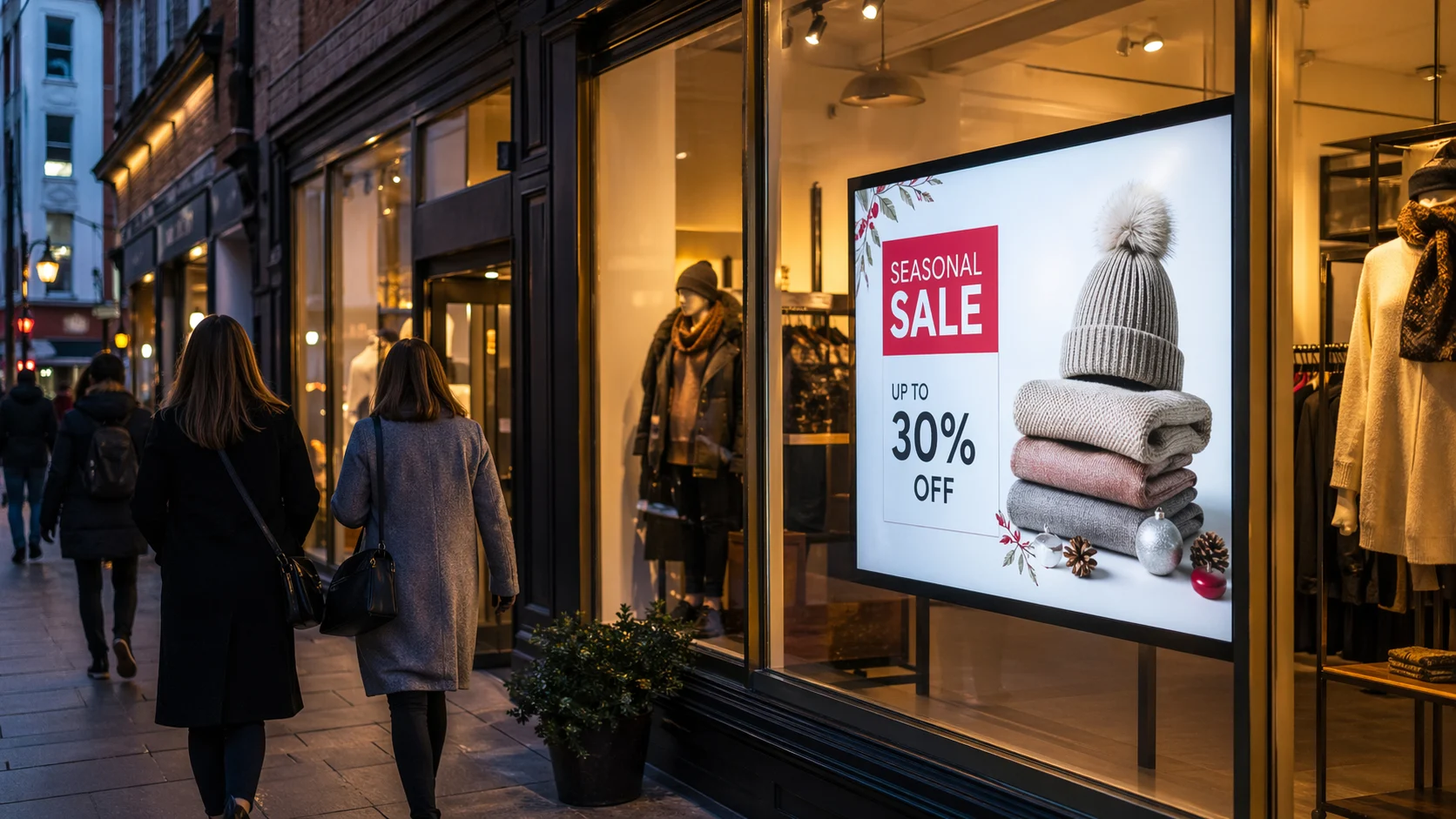
For a small shop, a window-facing screen can do more than a static display because it gives people a reason to slow down right now. Morning commuters can see one message. Lunch traffic can see another. Evening shoppers can see a last-minute offer before they pass the door.
Samsung Business Insights reports that retailers using digital signage saw a 29.5% increase in sales and a 52% boost in ad recall, while 70% of customers said digital signage influenced their purchasing decisions (source). Those are big-chain numbers, but the lesson scales down: visibility plus timing changes behavior.
Use the window screen for:
- Seasonal hooks. "Spring collection in store now" beats a mannequin people have seen for three weeks.
- Timed offers. Promote lunchtime gifts, after-work pickup, weekend bundles, or rainy-day essentials.
- Proof that you are open and current. A live screen makes the shop feel active before anyone touches the door handle.
Restaurants use a similar timing advantage with digital menu boards: breakfast, lunch, happy hour, and last-call offers all work better when the message changes with the moment.
3. In-Store Digital Signage Helps Products Get Noticed
Inside the store, shoppers miss things. They walk past the new arrivals rail. They do not read every shelf talker. They miss the bundle that would have made their basket bigger.
Digital signs for small businesses work best when they point attention at a specific product decision:
- New arrivals. Show the item on a model, in a room, or as part of a finished look. Context sells better than a folded stack.
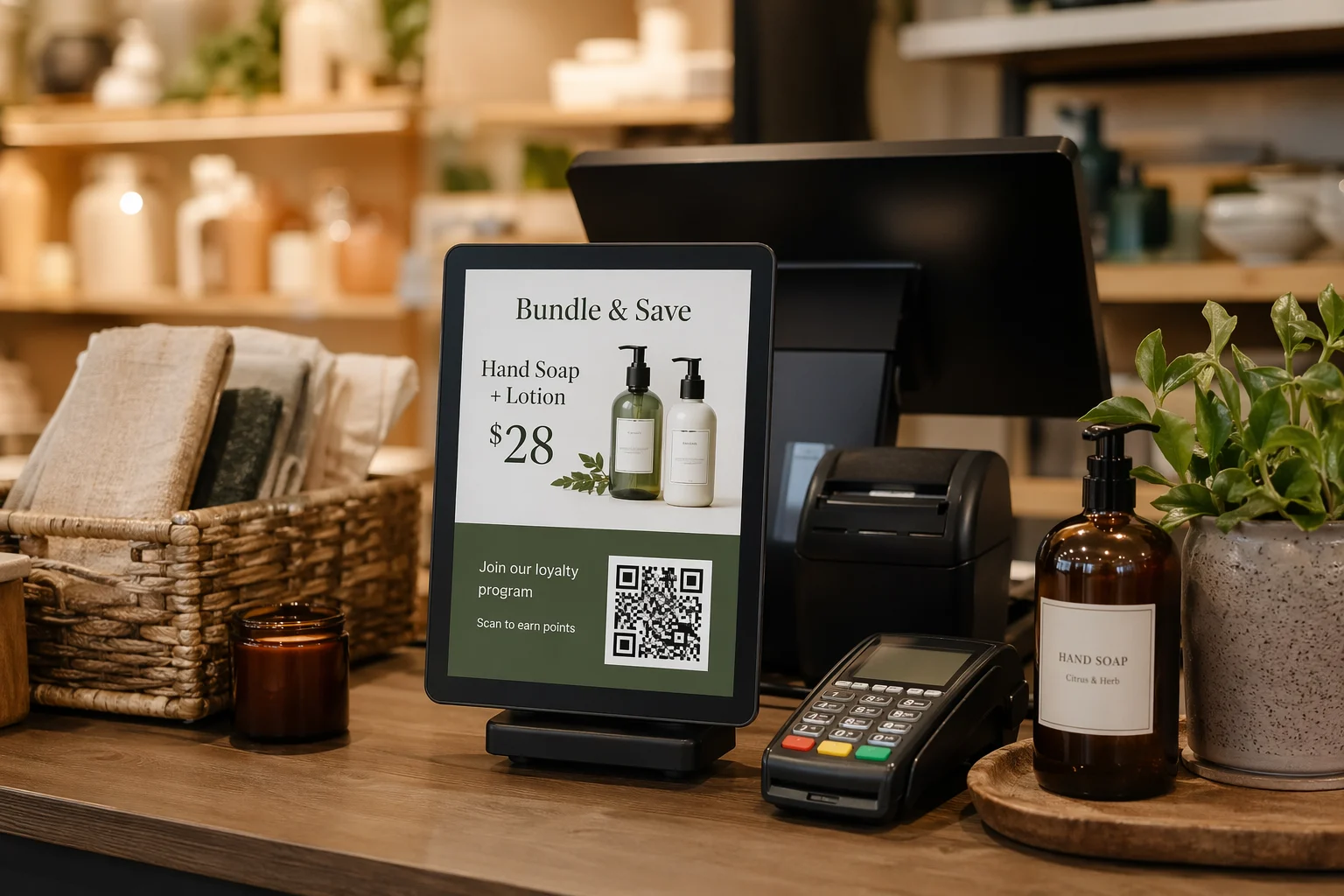
- Bundles. Put "hand soap + lotion" or "notebook + pen" near checkout with a simple price. Make the add-on obvious.
- Best sellers. People like buying what other people already trust. Your screen can highlight the top three items this week.
- High-margin products. If one category quietly pays the bills, give it screen time.
A 2026 AV Magazine report on a four-year in-store signage study found an 8.1% average sales lift across 237 campaigns backed by more than 30 million receipts, with stronger performance for impulse products, new launches, and known brands (source).
The takeaway is not "put screens everywhere." It is sharper than that: use screens where the shopper is already deciding.
4. Promotions Can Change as Fast as Your Inventory
Small retailers live close to the stockroom. You know what arrived late, what sold faster than expected, what needs to move before the season changes, and what customers keep asking for.
Your signage should move at the same speed.
- Flash markdowns. Drop slow-moving stock for the afternoon without printing a single red sticker.
- Weather-based offers. Rain starts? Push umbrellas, jackets, candles, hot drinks, or indoor activities.
- Sold-out replacements. If the featured product is gone, swap the sign to the next best option before customers ask.
- Event-day messages. A market, concert, school pickup rush, or local festival can all change what people want that day.
This is where cloud-based signage earns its keep. With a platform like Screenivo, you pair the display once, update the playlist from your laptop, and let the screen handle the timing.
5. Screens Make Small Shops Feel More Premium
Retail is emotional. People notice lighting, spacing, music, packaging, and the little signals that say "this place cares."
A well-designed screen can raise that perception without making your shop feel cold or corporate.
Use in-store digital signage to show:
- Product stories. A ceramic mug being made. A candle being poured. A fabric detail up close.
- Lookbooks. Show three ways to style the same jacket, lamp, skincare set, or gift basket.
- Customer proof. Rotate short review snippets, press mentions, or local awards.
- Brand mood. Slow video, clean photography, and seasonal visuals can make a small space feel curated.
There is a caution here. A Journal of Retailing study found that digital displays do not lift every retail format equally, and that message content matters: price-promotional content performed better than non-price content in the studied settings (source).
So keep it concrete. Beautiful content is useful, but the screen still needs a job.
6. Digital Signs Reduce Repetitive Staff Questions
Your staff should be selling, styling, advising, fitting, wrapping, and building relationships. They should not have to answer the same basic questions all day.
A screen near the entrance, fitting rooms, pickup shelf, or checkout counter can handle the repetitive stuff, much like hotel digital signage handles wayfinding, event updates, and service hours before guests need to ask:
- Returns and exchanges. Put the essentials in plain language, especially during gift-heavy seasons.
- Pickup instructions. Show where online orders are collected and what customers need ready.
- Loyalty program details. Explain the offer with a QR code instead of making staff pitch it from scratch.
- Store services. Alterations, gift wrapping, consultations, custom orders, delivery windows.
- Opening hours and exceptions. Holiday hours, early closes, private shopping events, stocktake days.
The goal is not to replace people. It is to protect their attention. Let the screen answer the predictable questions so your team can handle the human ones.
7. How to Start With One Screen Without Overbuilding
You do not need a screen in every corner. Start with one screen and one job.
For most small retailers, the best first screen is either:
- The window screen. Best if you depend on walk-in traffic and want to pull people from the street.
- The checkout screen. Best if you want to increase basket size, promote loyalty, or answer repeat questions.
- The feature-table screen. Best if your store has high-margin products that need explanation or styling ideas.
Then keep the playlist simple:
- One evergreen brand slide.
- One current promotion.
- One product spotlight.
- One practical information slide.
- One customer review or social proof slide.
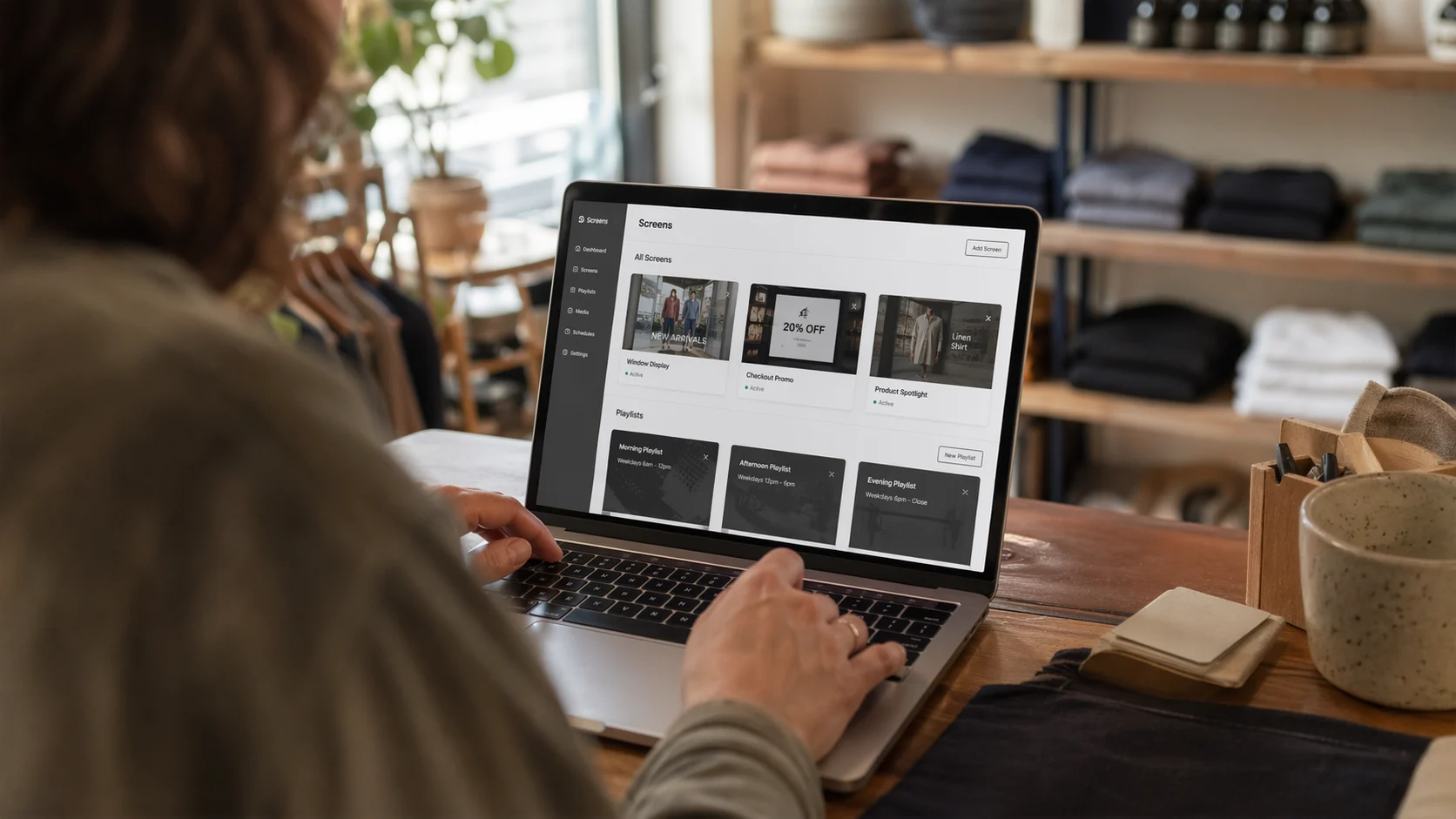
Update it once a week. That is enough to start. Once the habit is easy, add scheduling: weekday offers, weekend pushes, seasonal campaigns, and automatic end dates.
Good digital signage for shops should feel boring to manage. Plug in a display, pair it, upload the content, set the playlist, and get back to running the store.
The Bottom Line
Digital signage for retail stores is not about making your shop look like a chain. It is about making your best messages impossible to miss.
One screen can pull more people through the door. One screen can make the checkout counter sell harder. One screen can keep promotions current without reprinting, retaping, or asking your team to remember one more thing.
If you are ready to test retail digital signage in your own shop, get in touch with Screenivo. You can start with one screen, one playlist, and one clear goal.
Want more examples by industry? Explore our full library of digital signage guides.
Ready to make your shop screens work harder? Try Screenivo free and launch your first retail playlist in minutes.
Sources
- Samsung Business Insights — How digital signage drives retail traffic and sales (29.5% sales increase, 52% ad recall boost, and 70% purchase influence): insights.samsung.com
- AV Magazine — Four-year study proves in-store digital signage works (8.1% average sales lift across 237 campaigns and more than 30 million receipts): avinteractive.com
- Journal of Retailing — Do Digital Displays Enhance Sales? Role of Retail Format and Message Content (retail format and price-promotional message content affect signage performance): sciencedirect.com