Digital Signage for Restaurants: The 2026 ROI Guide
April 16, 20269 min readScreenivo Team
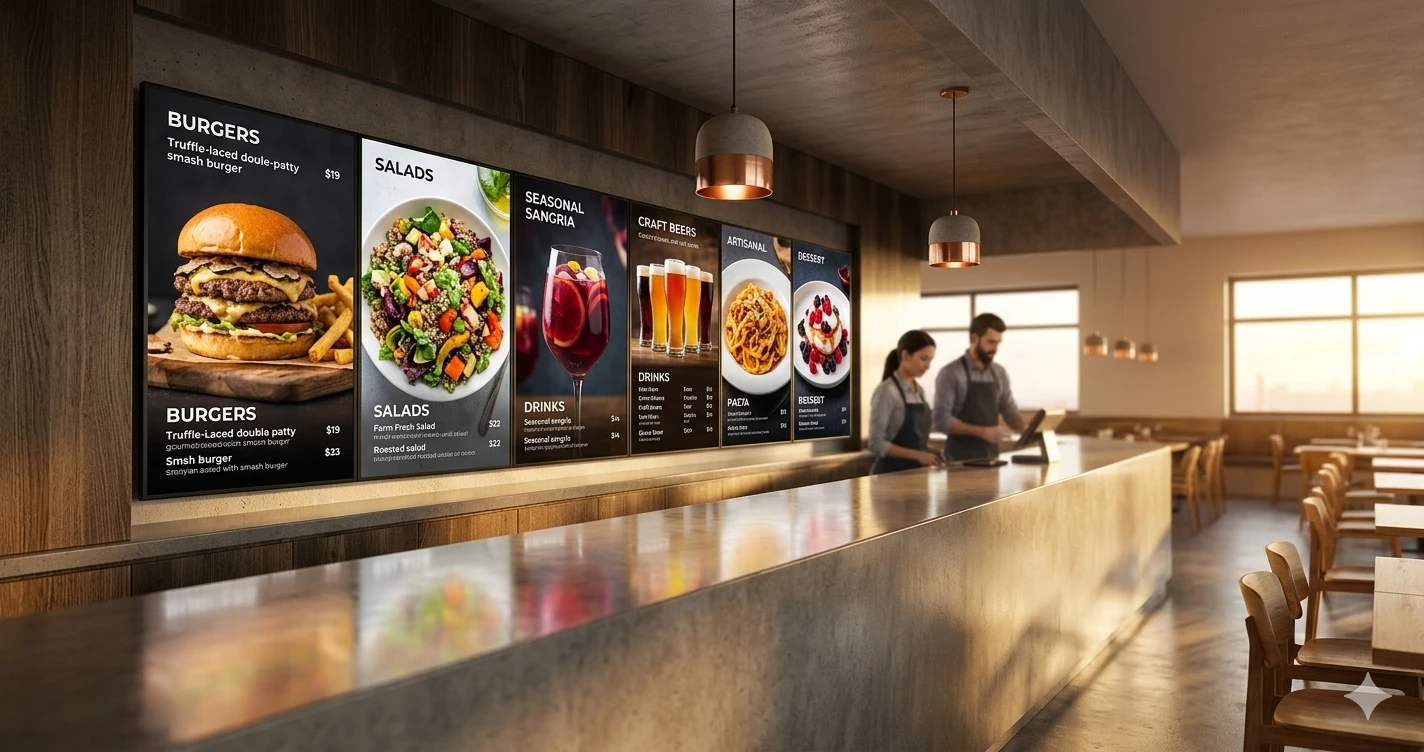
The printed board above your counter hasn't changed much since the 1950s. Guests have.
Today they're scrolling through food content on their phones before they even pick a restaurant. When they walk in and see a faded laminated sign, some of them have already mentally downgraded you.
Cloud-based digital menu boards turn every screen you own — the counter board, the drive-thru display, the TV near the waiting area — into something that actually sells. Whether you run a national QSR chain or a single fast-casual spot, here's what operators are finding when they make the switch in 2026.
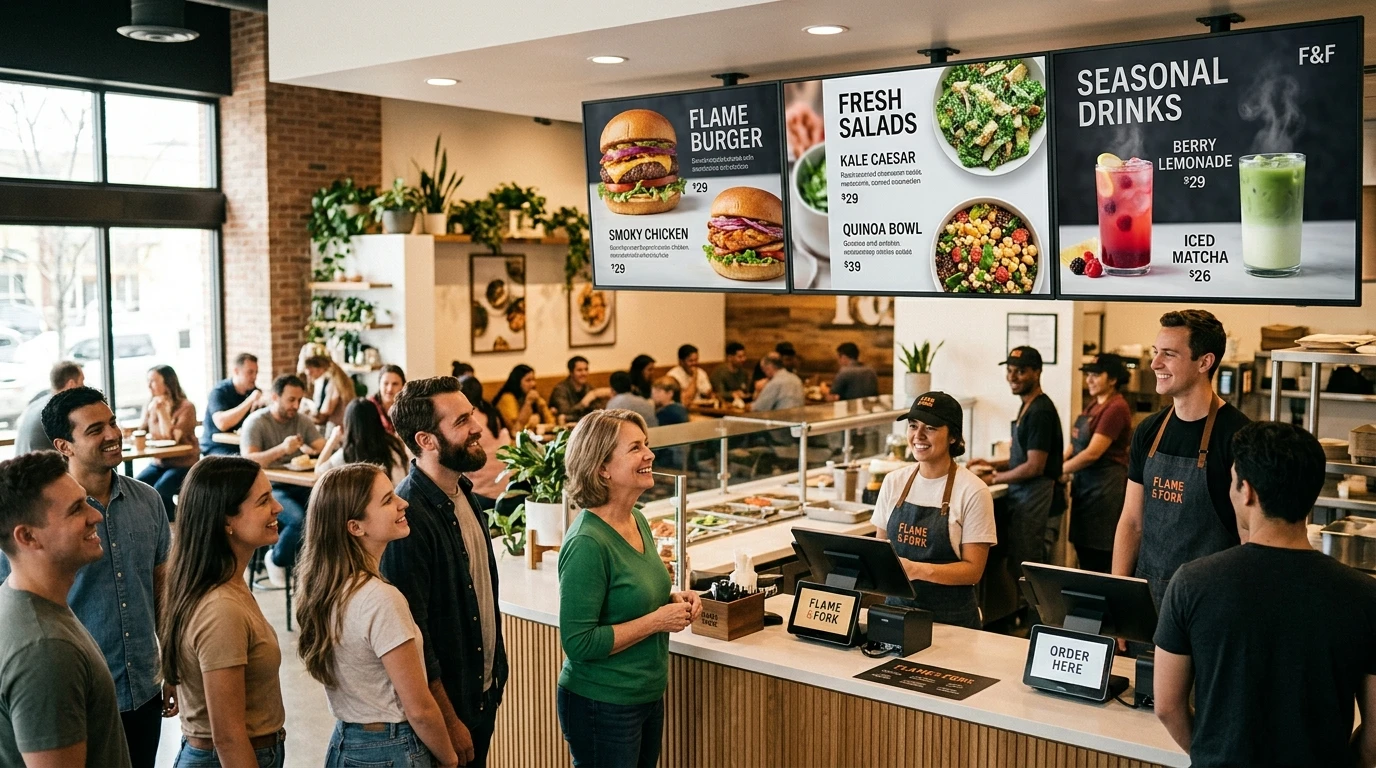
1. Digital menu boards sell more than paper ever could
Printed menus are static. Digital boards move, highlight, persuade — and in 2026, they can adjust prices on their own.
- Higher perceived quality. A 4K photo of a steaming bowl of ramen sells itself. Motion graphics capture roughly 400% more views than static displays (source), and around 8 out of 10 customers say they've made an unplanned purchase after seeing an item on a digital sign (source).
- Real-time upselling. Promote high-margin items during off-peak hours, or push combos right before closing. The screen adapts; the printed board doesn't. QSR operators typically see average order value lift 3–5% just from making items more appetizing.
- Dynamic pricing. Trigger happy-hour pricing automatically at 4 PM. Discount end-of-day pastries from 7 PM. Your POS sets the rule; the menu reflects it instantly.
- No reprint costs. Changed a price? Swapped a supplier? Removed a sold-out special? Update it in seconds, on one screen or across a hundred locations.
- Dayparting that just works. Breakfast until 10:30, lunch until 4, dinner after. Automatic, consistent across every location.
2. Faster service, shorter perceived wait times
A queue feels twice as long when there's nothing to look at. Putting content on a waiting-area screen — menu highlights, kitchen action, even local weather — can reduce perceived wait times by up to 35% (source).
For drive-thru and pickup counters, order-status boards tell guests exactly where their order is. Fewer "is mine ready?" interruptions for staff. Hotels use the same idea to reduce repetitive front-desk questions, just in a different setting.
3. One dashboard, every location — and it talks to your POS
Paper menus across multiple locations are a logistics headache. Cloud-based signage lets you push an update from your laptop and have it appear on every screen in every store within seconds.
What's changed in 2026 is what happens when signage connects to your POS and inventory:
- Launch a campaign across 20 stores at once.
- A/B test promotions between locations and track lift in your POS.
- Pull a menu item the moment inventory hits zero.
- Swap creative based on time of day, weather, or what's actually selling.
- Keep franchise branding consistent without shipping printed material.
This is what separates a modern cloud platform (like Screenivo) from the old USB stick and on-site IT model.
4. Win "near me" searches and build walk-in trust
Restaurant discovery in 2026 runs on Google Maps and social. Your screens can reinforce that the moment a guest walks in:
- Display your live Google Reviews and star rating to build immediate trust.
- Show your Instagram feed or user-generated content tagged at your location.
- Promote a QR code linking to your Google Business profile, turning happy diners into fresh local reviews.
- Highlight press mentions and local awards.
Every guest who posts a photo of your signage with your handle is free local reach.
5. Promote specials, events, and loyalty programs in real time
Your screens are ad space you already own. The same applies to retail digital signage — one well-placed display can push the right offer at exactly the right moment.
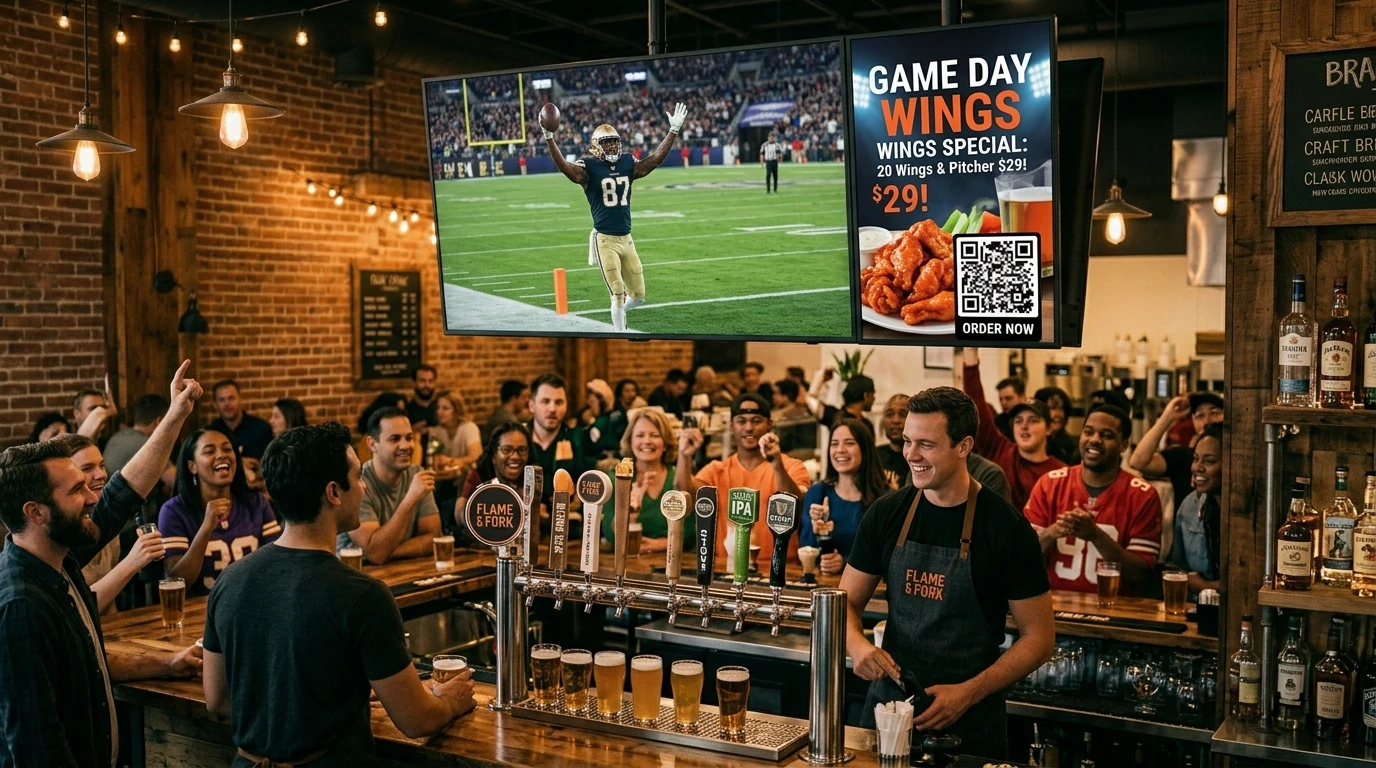
Happy hour in 15 minutes? Flip the creative. Live sports tonight? Promote it on the bar TVs all afternoon, then switch to the broadcast. Pushing a loyalty app? Show a QR code from the tables.
Guests are already sitting there looking at something. Might as well be you.
6. Automated compliance — from FDA calorie labeling to local health mandates
Allergen disclosures, calorie labeling, regional tax-inclusive pricing — the regulatory surface keeps expanding, and printed menus are out of date the moment they come off the printer.
Digital signage changes how that works:
- When the FDA updates calorie disclosure formatting, push the new template to every screen in one click.
- When a city changes its allergen labeling rules, update the 12 affected stores without touching the other 88.
- One source of truth. No Sharpie corrections, no stickers over old pricing.
For multi-unit operators, this alone often makes the decision straightforward. A compliance update across 100 stores goes from a week of printing and shipping to a 30-second dashboard push.
7. Sustainability: the quiet ESG case
A mid-sized chain reprinting laminated menus across hundreds of stores — every time a price, supplier, or seasonal item changes — burns through thousands of pounds of paper, plastic lamination, and ink a year.
Switching to digital cuts all of that:
- No printed waste for menu revisions.
- No shipping costs to franchise locations.
- Eligible for ESG reporting under waste-reduction and paperless-operations categories.
- A story guests actually respond to. "We went paperless" is worth putting on your website, your social, and your screens.
8. The ROI is faster than you'd expect
Most operators assume digital signage is a significant capital expense. In 2026, the numbers don't support that:
- Hardware — an off-the-shelf Android TV stick or smart display starts under $100.
- Software — modern SaaS platforms charge a monthly fee per screen.
- Install — plug in, pair with a 4-digit code, done.
Most restaurants reach payback within a few months through higher average order value, eliminated reprint costs, and fewer staff interruptions.
Getting started is easier than you think
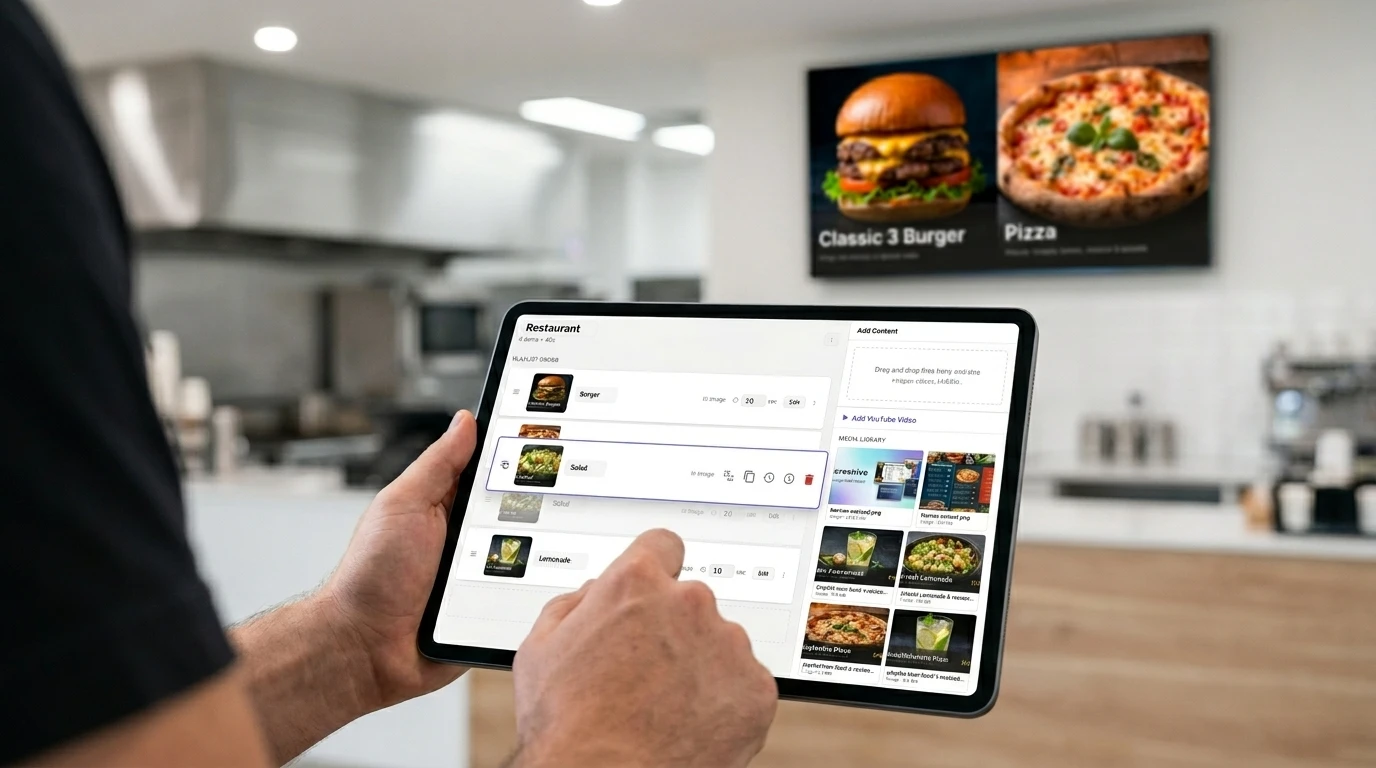
You don't need an IT team or an installer. A modern cloud platform lets you:
- Plug a small device into any TV or display.
- Enter a short pairing code on your dashboard.
- Drag and drop your menu, videos, and promotions into a playlist.
- Push it live to one screen or every location at once.
No servers, no cables, no drama.
The bottom line
Printed menus are the floor, not the ceiling. Most of your competitors have already moved on, and the ones who haven't are going to feel it. Digital signage isn't a big lift — the hardware costs less than a hundred dollars and the setup takes minutes. The sales bump, the compliance time saved, and the reprint costs that just disappear tend to cover it within months.
If you want to see what this looks like in your restaurant, get in touch with Screenivo — we'll have your first screen live in under 10 minutes.
Want more examples by industry? Explore our full library of digital signage guides.
Ready to modernize your menu boards? Try Screenivo free and see the difference a connected screen makes. No credit card. No installer. Just plug in and go.
Sources
- Scala — Benefits of Digital Menu Boards (perceived wait time reduction up to 35%): scala.com/en/resources/blogs/benefits-of-digital-menu-boards
- Digital Screen Displays — Do Digital Menu Boards Increase Sales? 6 Research-Backed Statistics (400% more views for motion vs static; 8 out of 10 unplanned purchases): digitalscreendisplays.ie